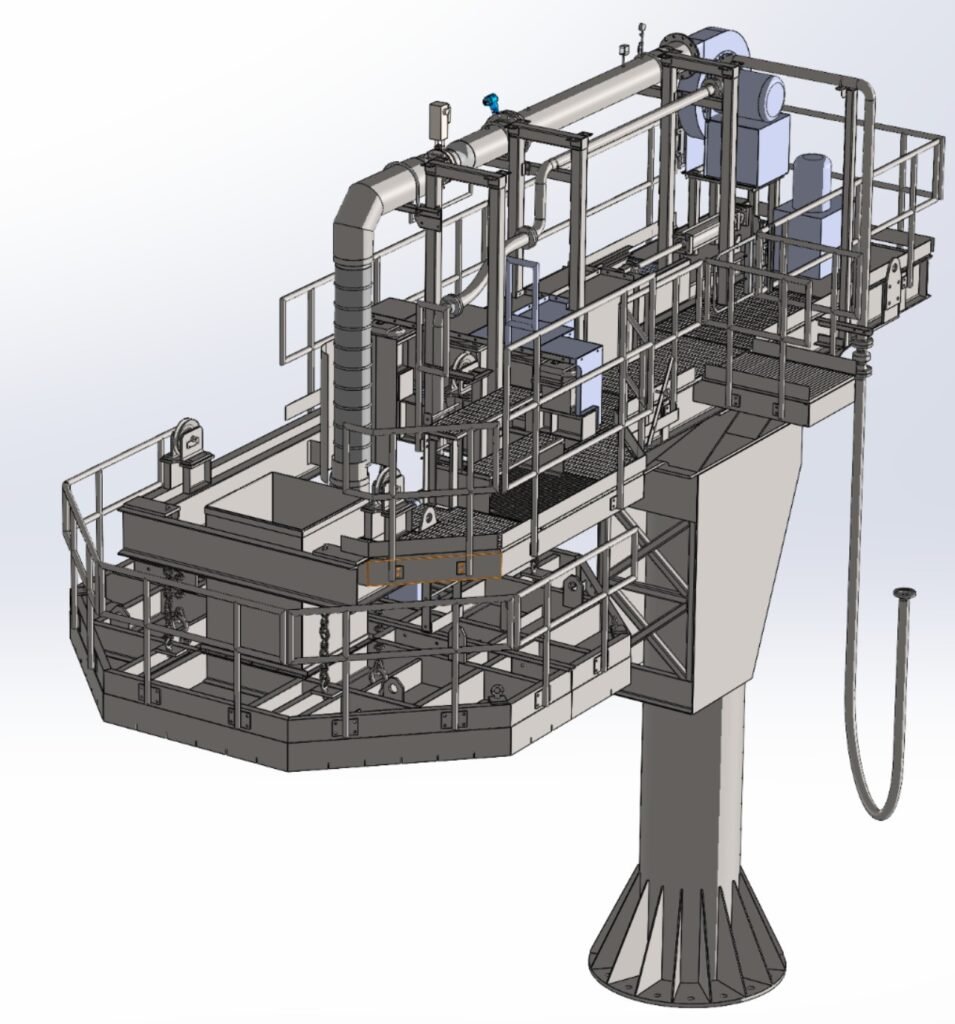
Ladle Preheater Refractory Upgrade
ASTM C680 Heat-Flow Analysis
Case Study: Refractory Insulation Upgrade & Structural Impact Study for a Steel Plant Ladle Preheater
Project Background & Overview
In primary steelmaking operations, horizontal ladle preheaters are critical equipment used to preheat refractory-lined ladles to elevated temperatures before receiving molten steel from electric arc or basic oxygen furnaces.
At a major steel facility, horizontal preheater covers were lined with soft ceramic fiber blanket insulation. While thermally effective, the fiber blanket suffered continuous mechanical degradation requiring frequent patching and causing unscheduled downtime. Complete Combustion was engaged to perform a comprehensive thermal, structural, and mechanical feasibility study to determine whether a heavy castable lining system could be implemented safely.
The Engineering Challenge
- Thermal Boundary Shifts: Hard castable refractory exhibits higher thermal conductivity than soft fiber, raising cold-face steel temperatures and increasing surface heat radiation hazards.
- 2x Mechanical Weight Increase: The castable lining increased total cover weight from 14,500 lbs to 30,000 lbs, more than doubling bearing loads on the transfer car.
- Center of Gravity Shift: The added mass altered the preheater car balance, shifting the CG upward and forward toward the front wheel set and increasing tipping risks on uneven tracks.
Engineering Approach & Scope Delivered
- ASTM C680 Thermal Profiling: Executed heat-transfer calculations comparing the 12″ fiber blanket against the proposed 8″ hard castable + 2″ low-density board lining under a 2,000°F hot-face condition.
- Cold-Face Thermal Mitigation: Calculated the rise in cold-face temperature from 159°F to 268°F and engineered mitigation measures including Microtherm insulation backing and personnel barrier guards.
- Wheel Bearing Load & Safety Factor Analysis: Evaluated wheel loads (increasing from 4,200 lbs to 9,050 lbs per wheel) and calculated the resulting drop in bearing factor of safety from 3.13 to 1.45, establishing a preventive inspection schedule.
- Center of Gravity & Stability Modeling: Modeled the transfer car’s CG shift, demonstrating increased tipping vulnerability if rail tracks accumulated mill scale or debris.
- Limit Switch Recalibration: Defined recalibration guidelines for travel limit switches to account for the 2″ reduction in overall refractory thickness.
Operational Results
- Provided the steel plant with exact structural, mechanical, and safety boundaries prior to capital commitment.
- Enabled a safe conversion to durable hard castable refractory, cutting recurring maintenance cycles while establishing clear operational safeguards for the transfer car.
Request a Refractory Thermal Study | Explore Foundry Furnace Services