Mine Air Heater House Engineering | Complete Combustion
Extreme Northern Climates
Case Study: Seismic-Resilient Heater House Design for a Northern BC Mine Site
Project Background & Site Overview
A remote underground hard-rock mining facility operating in Northern British Columbia required two high-capacity industrial mine air heater houses to maintain ventilation portal freeze prevention throughout sub-zero winter operations down to -40°C. Due to the geographic location, the heating structures were subjected to high climatic ground snow loads combined with regional seismic activity.
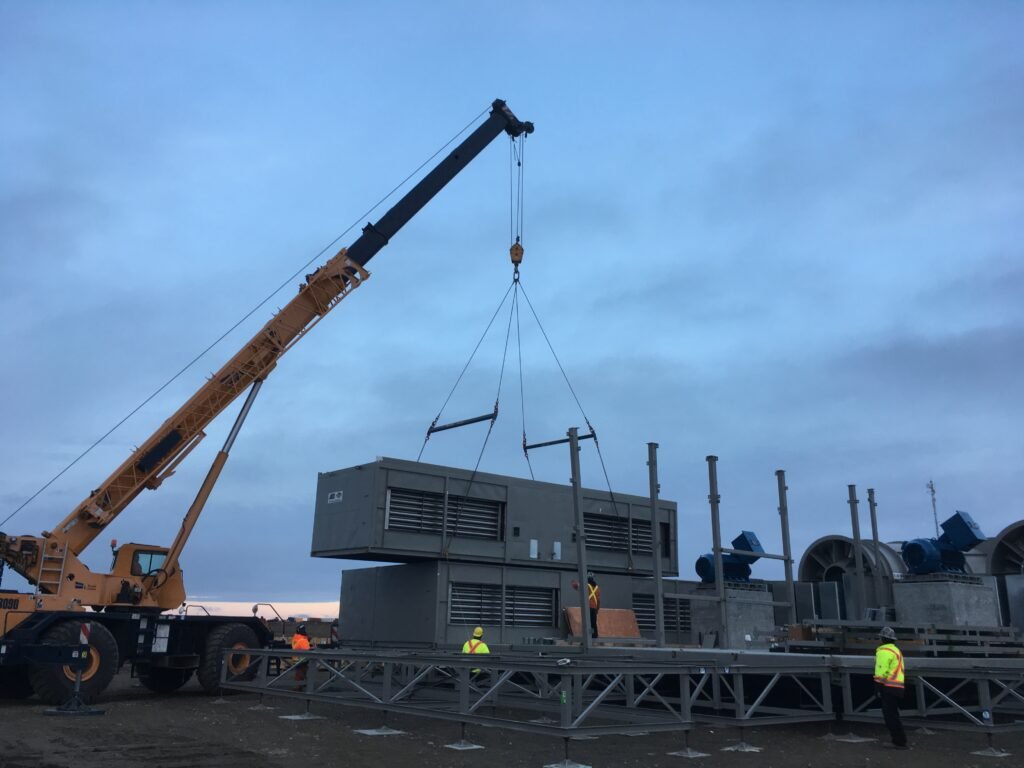
The mine needed a transportable, modular design that could be shipped in sections over logging roads and erected rapidly on-site, yet function structurally as a single, rigid closed-box assembly. Complete Combustion was engaged to deliver the complete structural framing, mechanical layout, and unfactored foundation load engineering package.
The Engineering Challenge
1. Severe Multi-Axis Climatic & Seismic Loading: The enclosure design had to resist heavy downward snow loads under National Building Code of Canada (NBCC) climatic data while maintaining lateral shear stiffness during seismic excitation.
2. Modular Shipping vs. Global Diaphragm Stiffness: To allow road transport, each heater house had to be broken into four distinct modules. When bolted together in the field, the assembly needed to eliminate racking and behave as a single continuous diaphragm.
3. Civil Interface Documentation: The mine’s civil engineering team required clear, unfactored vertical and lateral reaction loads to design the concrete pad, reinforcing rebar cage, and embedment anchors under NBCC and British Columbia Building Code (BCBC) requirements.
Engineering Approach & Scope Delivered
- Fully Welded HSS Structural Framing: Engineered structural frames using Hollow Structural Sections (walls: 4x2x3/16″, roof/floor: 6x3x1/4″) welded into rigid wall, roof, and floor panels to provide superior torsional and lateral stiffness.
- Roof-Level Structural Coupling: Engineered a heavy mechanical tie connection joining the left-hand and right-hand heater houses at the roof line, increasing global structural stiffness and sharing lateral seismic loads across both units.
- High-Capacity Modular Connections: Designed field joints utilizing 46×5/8″ A325 Type 1 high-strength structural bolts per heater, ensuring slip-resistant modular continuity.
- Direct 12-Point Foundation Anchorage: Integrated 12 base anchor points (1/2″ welded baseplates with 1″ holes for 3/4″ anchor rods), establishing direct load paths from the steel frame into the concrete pad.
- Flexible Mechanical Piping Layout: Mounted all internal fuel piping using unistrut clamps, heavy U-bolts, and braided flexible hoses across module boundaries to isolate gas piping from structural movement and prevent stress fatigue.
- Comprehensive Load Documentation: Delivered General Arrangement deadweight drawings and Foundation Layout packages specifying unfactored snow, live, and dead loads directly to the site civil team.
Operational Results & Client Impact
- The mine’s structural and civil engineers completed foundation engineering and anchor placement directly from the delivered load data with zero modifications or site delays.
- The modular structures were transported, erected, and bolted together on-site with full structural continuity and complete alignment with NBCC/BCBC seismic and climatic standards.
Request a Mining Thermal Review | Explore Mine Air Heating Applications